
Policy Brief | Enabling a Nature-Positive Europe: Pathways and Mechanisms of Transformative Change
Introduction
Transformative change is increasingly recognised as essential for addressing the interconnected social-ecologicalI challenges of biodiversity loss, climate change, and social inequality. While a variety of actions supporting transformation to a sustainable future has been identified (IPBES 2024a), less attention is paid to the mechanisms through which actions interact and collectively generate change.
The aim of this policy brief is to shed light on these mechanisms, the “building blocks” of the transformative pathways, that unfold over time. Its aim is to highlight the necessity to not focus on individual interventions in isolation, but examine how actions combine, enable, or reinforce each other in a manner that human well-being, socio-economic development, and nature are not compromised (IPBES 2024b).
Evidence and Analysis
Transformative Pathways to Nature-Positive Futures
BIONEXT developed three complementary visions for a nature-positive Europe based on the different Nature Futures Framework value perspectives – Nature as Culture (NaC), Nature for Nature (NfN), and Nature for Society (NfS) – and co-created plausible transformation pathways for each vision across the 2030, 2040, and 2050 time- horizons (Lazurko et al., 2025; de Pater et al. 2026; see also https://www.bionext-project.eu/policy-brief-4) (Figure 1a, 1b and 1c). These visions and pathways were co-developed with approximately 25 stakeholders from across Europe representing the biodiversity, water, food, energy, transport, and health sectors. The resulting pathways enabled the identification of recurring mechanisms, revealing the distinct transformative logics through which each pathway advances nature-positive futures (Vaňo et al., 2026).
Pathway 1: Nature as Culture - Dòigh Nàdair
Dòigh Nàdair is based on relational values of nature and envisions a Europe where relationships between people and nature are guided by biocultural values such as stewardship, reciprocity, solidarity, and care. The pathway towards this future is community-led and embeds biocultural values in governance, education, and everyday life. It combines local stewardship, stronger rural economies, and the deliberate phase-out of extractive systems to create a more reciprocal relationship between people and nature.

Figure 1a. Illustration of the three BIONEXT transformative pathways: Nature as Culture – Dòigh Nàdair.
Pathway 2: Nature for Nature – NaturAll
NaturAll is based on intrinsic values of nature. It imagines a future in which society is organised around the principle of sufficiency: meeting everyone's needs while respecting ecological boundaries. Via the gradual institutionalisation of ecological limits in governance, production, and consumption, the economy is progressively reshaped and environmental pressures reduced. A strong regulatory framework, including the rights of nature, drives the phase-out of unsustainable activities. Citizen assemblies, stewardship initiatives, and local action support the transition to adapt to new ways of living and producing.
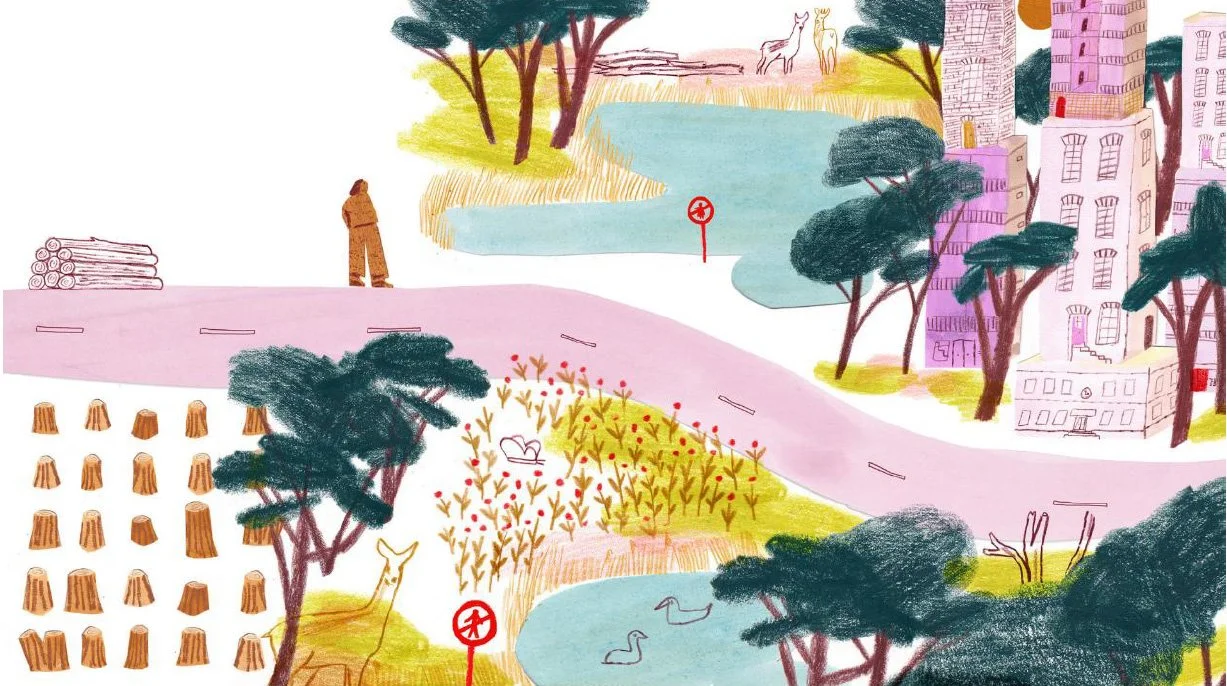
Figure 1b. Illustration of the three BIONEXT transformative pathways: Nature for Nature - NaturAll.
Pathway 3: Nature for Society – Return to Nature
Return to Nature is based on instrumental values of nature. It envisions a Europe where biodiversity and climate objectives are fully integrated into public policy, economic decision-making oriented on circularity, and innovation systems. This innovation- and governance-driven pathway, supported by a crisis-led shift in public awareness, strengthens support for nature-based solutions, sustainability agenda, strengthening institutions and coordinating action across the society.

Figure 1c. Illustration of the three BIONEXT transformative pathways: Nature for Society – Return to Nature.
Mechanisms for Reaching Nature-Positive Futures
The analysis identified 634 actions distributed across the pathways leading to the three visions. A further analysis revealed a set of recurring pathway mechanisms, serving as functional configurations of interacting actions that explain how transformative change unfolds over time. Across all pathways, the key transformative mechanisms are fundamentally governance-led, with changes in institutional and economic arrangements creating the enabling conditions for broader structural and societal change. Eventually, these changes consolidate into new socio-ecological configurations that correspond with the pathway visions.
Mechanism 1: Reconnecting people and nature through governance, localisation, and social equity
The Nature as Culture – Dòigh Nàdair pathway mechanism (Figure 2) is structured around two entry routes: deliberative and decentralised governance, and localisation. Both seek to strengthen community agency, institutional capacity, and place-based governance through different trajectories, as local empowerment is key to broader socio-ecological transformation. Social equity emerges as the central organising principle, linking governance reform and localisation with wider socio-ecological change. Social equity is crucial for redistributing resources, power, opportunities, and environmental benefits among diverse communities. Over time, communities gain greater influence over decisions affecting their landscapes, livelihoods, and resources, gradually strengthening their capacity to shape their own futures. This ultimately results in land and resource ownership shifting towards local communities that embrace regenerative practices and lead a rural renewal. As ownership, opportunities, and decision-making power become more evenly distributed, regenerative land stewardship and local resilience reinforce one another. Ecological regeneration and rural revitalisation emerge hand-in-hand as key outcomes.
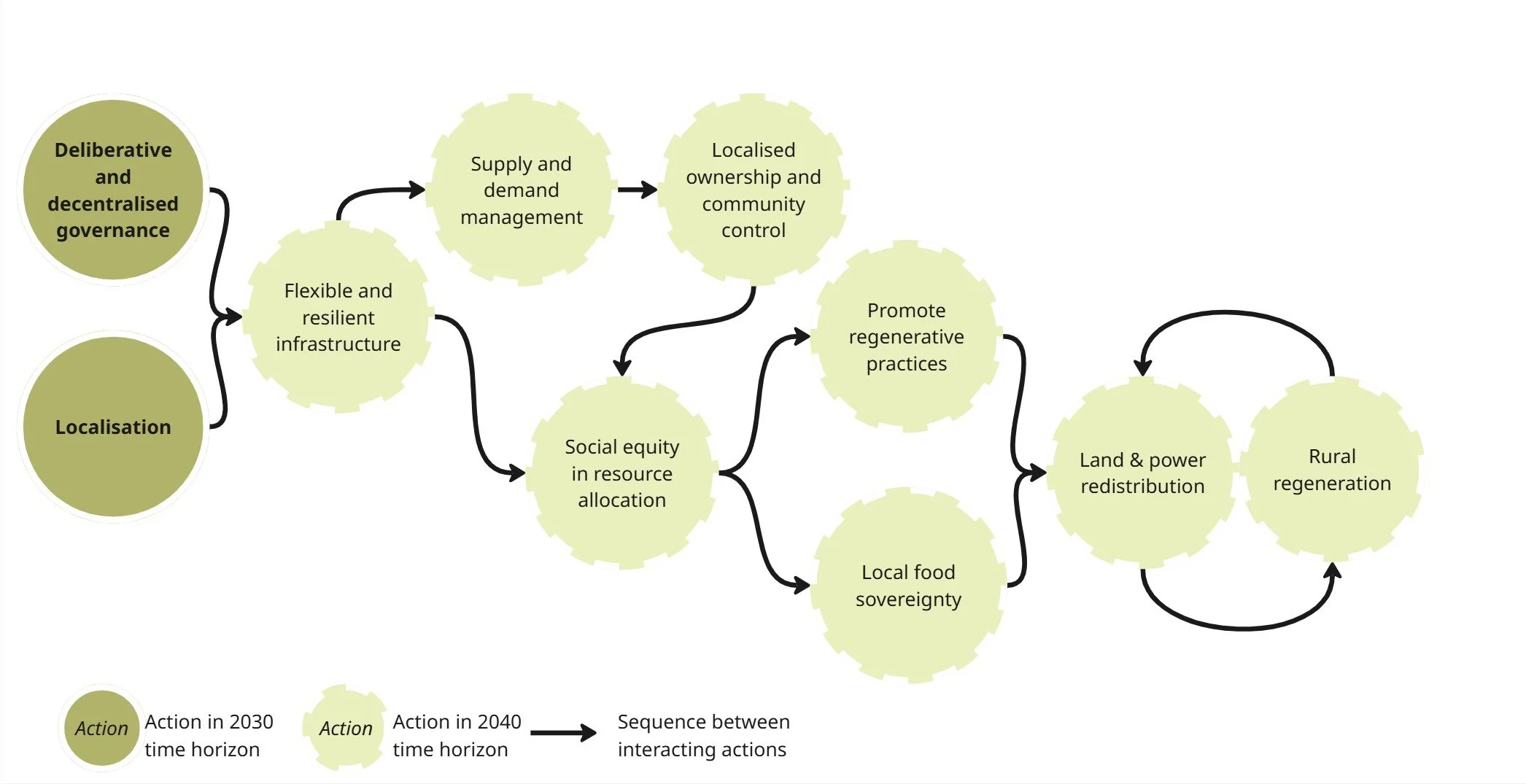
Figure 2. The Nature as Culture – Dòigh Nàdair pathway mechanism. The time horizons of the individual elements are indicated by the colour and shape of the nodes: by 2030 – darker, smooth-edged nodes; by 2040 – lighter, notched-edged nodes.
Mechanism 2: Making space for nature through regenerative food systems, localised economies, and nature-centred institutions
The Nature for Nature – NaturAll pathway mechanism (Figure 3) is structured around two entry routes: law, policies and conventions, and their enforcement. Both the legal foundation and the policy implementation mechanisms support institutional change to develop localised economies centred around regenerative food systems, while nurturing community ownership and nature protection. The pathway frames biodiversity conservation as a catalyst for wider societal transformation rather than as a standalone challenge. While reciprocity represents a central value perspective in the Nature as Culture mechanisms above, the intrinsic value of nature is the key principle here. Long-term systemic restructuring is enabled by biodiversity-centred institutions – the central intermediate outcomes of this mechanism – ultimately leading to transformed markets, fully sustainable food systems, and the widespread recognition of the rights of nature.

Figure 3: The Nature for Nature – NaturAll pathway mechanism. The time horizons of the individual elements are indicated by the colour and shape of the nodes: by 2030 – darker, smooth-edged nodes; by 2040 – pale yellow-green nodes with notched edges; by 2050 – blue nodes with more densely notched edges.
Mechanism 3: Nature-based resilience and societal wellbeing through circular economies and integrated resource systems
The Nature for Society – Return to Nature pathway mechanism (Figure 4) is structured around two entry routes: resource use reduction or circularity, and economic and fiscal instruments. Both seek to reduce pressure on resources through circular approaches and to redirect societal development towards more sustainable and resilient trajectories through economic incentives. These trajectories include responsible consumption and resource stewardship, stronger human–nature connectedness, and governance focused on healthy ecosystems. The widespread implementation of nature-based solutions and preventive health approaches strengthen connections between ecological processes and societal wellbeing. This transforms circularity from a technical strategy into a broader organising principle for coordinated socio-ecological change, making it foundational to resilient and healthy socio-ecological systems. Ultimately, the pathway leads to integrated circular systems, novel economic approaches, and AI-based infrastructure.

Figure 4: The Nature for Society – Return to Nature pathway mechanism. The time horizons of the individual elements are indicated by the colour and shape of the nodes: by 2030 – darker olive-green, smooth-edged nodes; by 2040 – pale yellow-green nodes with notched edges.
Policy Implications and Recommendations:
What the Pathway Mechanisms Reveal: Five Priorities for a Nature-Positive Europe
Transformation is a cumulative process, with pathway mechanisms bridging the gap between broad visions and specific response options. It should therefore
be understood as a highly interconnected and adaptive process rather than a strict sequence of steps.
a. All pathways display a common transformation architecture, despite their different value orientations. They also illustrate a common temporal logic, highlighting the need to build both institutional capacity and social legitimacy for transformative change.
Transformative change across all pathways is fundamentally governance-led, with institutions, policies, and decision-making systems acting as primary enablers of long-term socio-ecological transformation. This aligns with recent IPBES conclusions that transformative change depends fundamentally on governance and institutional reform, participation, values change, and economic restructuring, rather than technological solutions alone
(IPBESa 2024; Gosnell et al., 2024; Leach et al., 2026).a. Embed biodiversity objectives across sectors through legal frameworks, governance capacity, and economic incentives.
b. Identify synergies and trade-offs to help position nature as a foundation for long-term societal resilience, rather than as a competing objective.
Nexus integration increases over time in all pathways, suggesting that durable sustainability transformations depend on progressively linking biodiversity, water, food, energy, transport, and health, rather than addressing them as separate sectors. This aligns closely with a key IPBES message that transformative change must move beyond siloed approaches and address interconnected systems (IPBESb 2024; Mangalagiu et al., 2024).
a. Food systems and biodiversity governance emerge as particularly important entry points for transformative change because they connect climate mitigation, water resource management, health, livelihoods, and economic systems.
b. Adapt the form of the transformation to the domain concerned. As food emerges as a central transformation arena, context-specific framings, such as food sovereignty, regenerative food systems, or food security, can strengthen engagement and policy messaging.
Equity functions not only as a normative objective, but also as a critical principle of change, enabling the redistribution of resources, power, opportunities, and environmental benefits across society.
a. Design policies that institutionalise equity as a design principle by strengthening participation governance, developing supportive social policies, and prioritising just transitions.
b. Leverage just transition approaches that can help empower communities by addressing both the costs and benefits associated with transformative pathways.
Long-term transformation requires both institutional restructuring and deeper cultural change, including shifts in values, behaviours, social norms, and human–nature relationships.
a. Adopt integrated policy portfolios that support multiple entry points to transformative change, including community empowerment, biodiversity governance, and the circular economy, while aligning them towards shared nature-positive outcomes.
b. Complement governance and economic reforms with sustained investments in education, public participation, and social learning to foster the values, behaviours, and human–nature relationships needed for long-term transformative change.
References:
de Pater, M., Hebinck, A., Nieboer, S., Lazurko, A., Biesbroek, R., Pereira, L., … Teunissen, A. (2026). Plurality in transformative change: three co-created pathways toward nature-positive Europe (s). Preprint retrieved from osf.io/preprints/socarxiv/v4rfh_v2
Gosnell, H., Reyes García, V., Zinngrebe, Y., Almeida Magris, R., Benessaiah, K., Bonilla-Moheno, M., Chandipo, R., Claudet, J., Gemmill-Herren, B., Goldstein, B., Huntjens, P., Ifejika Speranza, C., Nakao, F., Pandit, R., Bosch Pereira, L., Raab, K., Soares, T., Tittonell, P., Guo, X., & Miwa, K. (2024). IPBES Transformative Change Assessment: Chapter 5. Realizing a sustainable world for nature and people: transformative strategies, actions and roles for all. IPBES Secretariat, Bonn, Germany. https://doi.org/10.5281/zenodo.11382248
IPBES (2024a). Thematic Assessment Report on the Underlying Causes of Biodiversity Loss and the Determinants of Transformative Change and Options for Achieving the 2050 Vision for Biodiversity of the Intergovernmental Science-Policy Platform on Biodiversity and Ecosystem Services (Transformative Change Assessment). O’Brien, K., Garibaldi, L., and Agrawal, A. (eds.). IPBES secretariat, Bonn, Germany. https://doi.org/10.5281/zenodo.11382215
IPBES (2024b). Thematic Assessment Report on the Interlinkages among Biodiversity, Water, Food and Health of the Intergovernmental Science-Policy Platform on Biodiversity and Ecosystem Services. Harrison, P. A., McElwee, P. D., and van Huysen, T. L. (eds.). IPBES secretariat, Bonn, Germany. https://doi.org/10.5281/zenodo.13850054
Lazurko, A., de Pater, M., Kim, H., Hebinck, A., Biesbroek, R., DeClerck, F., Krupnik, S., Okruszko, T., Pereira, L. M., Proka, A., Sakellari, E., & Harrison, P. A. (2025). Envisioning nature-positive futures for Europe: Inspiring transformative change at the biodiversity nexus. Ecosystems and People, 21(1), 2561107. https://doi.org/10.1080/26395916.2025.2561107
Leach, K., Loyola, R., Chatwin, A., van Leenders, C., Guillemin, I. M., Park, M. S., Bin Syed Hazari, S. M., Yiu, E., Prodani, K., Rabeschini, G., Rawlins, J., & Trommetter, M. (2026). IPBES Business and biodiversity assessment Chapter 6: Creating an enabling environment for business: options for action by governments, the financial sector, Indigenous people and local communities and civil society. https://doi.org/10.5281/zenodo.17074601
Mangalagiu, D., Saito, O., Sitas, N., Dias, A. C. E., Felipe-Lucia, M., Filyushkina, A., GHOSH, S., Goncalves, L. R., Hiwasaki, L., Kok, M., Lynch, A. J., Machado, M. R., Ometto, J., P. F. Pires, A., Rhodes, J., Vallet, A., & Xie, L. (2024). IPBES Nexus Assessment: Chapter 4 – Policy and sociopolitical options across the nexus that could facilitate and accelerate the transition to a range of sustainable futures. https://doi.org/10.5281/zenodo.13850306
Vaňo, S., Linney, G., Lazurko, A., de Pater, M., Viesca-Ramirez, A., Jungwirth Brezovska, R., Harrison, P.& Harmáčková, Z. (2026). Recurring mechanisms of transformative change driving nature-positive pathways in Europe. Preprint. Zenodo. https://doi.org/10.5281/zenodo.21728167
The project: BIONEXT is a research and innovation project that joins the fight for nature and biodiversity. The project produces new evidence to better understand biodiversity loss and demonstrates how biodiversity underpins every aspect of life; the water we drink, the food we eat, and our health. To secure and protect these values, the project demands transformative change: BIONEXT’s goal is a sustainable society, where links between biodiversity, water, food, energy, transport, climate, and health are acknowledged and nature and biodiversity are a part of everyday choices and policymaking.
Project coordinator: Finnish Environment Institute (Syke), (Finland)
Project partners: Dutch Research Institute for Transitions (DRIFT), (Netherlands); Global Change Research Institute of the Czech Academy of Sciences (CzechGlobe), (Czech Republic); Athina-erevnitko kentro kainotomias stis technologies tis pliroforias, ton epikoinonion kai tis gnosis (ATHENA), (Greece); Karlsruhe Institute of Technology (KIT), (Germany); Oppla, (Netherlands); Foundation for Applied Information Technology in Environment, Agriculture and Global Changes (TIAMASG), (Romania); the University of Antwerp, (Belgium); The UN Environment Programme World Conservation Monitoring Centre (UNEP-WCMC), (United Kingdom); UK Centre for Ecology & Hydrology (UKCEH), (United Kingdom)

Bionext Policy Brief | 6 | 2026
Enabling a Nature-Positive Europe: Pathways and Mechanisms of Transformative Change
Authors: Březovská, R. J. 1), Vaňo, S. 1), de Pater, M. 2), Harmáčková, Z. 1), Harrison, P. 3) Lazurko, A. 3)
1) Global Change Research Institute of the Czech Academy of Sciences - CzechGlobe, 2) DRIFT 3) UK Centre for Ecology & Hydrology (UKCEH)
Layout: Finnish Environment Institute (Syke)
Figures 1a, 1b, 1c: Interpreted and illustrated by Maria Fraaije-Fraaijeboel
Figures 2, 3, 4: Interpreted by Simon Vaňo and illustrated by Zuzana Harmáčková
Photo: stock.adobe.com
Publisher: Finnish Environment Institute (Syke)
Helsinki 2026
ISBN: 978-952-11-5883-4 (PDF)
DOI (Helda): 10.58013/5bhb-f730