
Policy Brief | Exploring long-term biodiversity futures in Europe: Using the future to inform policy and decision making today
Introduction
Biodiversity underpins a healthy, resilient planet that supports both people and nature. Yet, escalating human pressures are driving biodiversity loss and accelerating species extinction. These changes pose a direct and growing threat to human wellbeing, contributing to an increased risk of infectious pathogen emergence, food insecurity and reduced nutritional diversity. Climate change further amplifies ecosystem disruption and introduces new risks, including mortality and infrastructure damage from extreme weather events and population displacement from sea level rise. These impacts fall disproportionately on the most vulnerable communities and risk deepening inequalities.
Recent assessments from the Intergovernmental Science-Policy Platform on Biodiversity and Ecosystem Services highlight two key messages. First, halting and reversing the biodiversity crisis requires transformative change, moving beyond incremental fixes toward fundamental, system-wide shifts in views, structures and practices that enable sustainable futures. Second, the biodiversity crisis cannot be addressed in isolation. Nexus approaches are required to understand interdependencies between biodiversity and other crises and sectors, revealing co-benefits, anticipating trade-offs and supporting more efficient and synergistic policy design.
Shared visions and scenarios of potential futures can leverage these findings to anticipate future risks to biodiversity and inspire policy design. Exploratory scenarios characterise what could happen, illustrating risks to biodiversity under different societal futures. These approaches can be used to identify the most influential drivers and interactions shaping future outcomes and support policy design that is robust to future uncertainty. In contrast, target-seeking scenarios focus on what we want to happen by envisioning desirable futures and generating pathways of transformative action that mitigate biodiversity loss.
Evidence and Analysis
Exploring the biodiversity implications of societal trajectories in Europe to 2100
Exploratory scenarios characterising future societal trajectories to 2100 for global climate research and policy making have a critical gap: they exclude biodiversity and nature (i.e., the Shared Socio-economic Pathways). Therefore, feedbacks between socio-economic and environmental systems are not captured in these scenarios, obscuring cascading risks and limiting their ability to inform action to address the biodiversity and climate crises simultaneously.
In order to enable a more holistic view of Europe’s futures, we integrated the role of biodiversity and nature into these societal futures together with a diverse group of stakeholders. We did so using a nexus approach, considering interlinkages between biodiversity, energy, food, health, water and transport. The resulting narratives paint a picture of four contrasting scenarios. These include only one desirable future for biodiversity, enabled by a widespread shift to sustainability. Other scenarios have mixed or negative impacts. A European future marked by geopolitical fragmentation and conflict applies social pressures that interact with and amplify rapid ecological decline. A technologically advanced “green” Europe allows benefits to accrue mainly to a small political and business elite, generating mixed outcomes for social welfare and ecosystems. Finally, a high-fossil-fuel Europe adopts technological fixes that mask the impacts of biodiversity loss in the short term, only for cascading risks to emerge later in the century.
We found that incorporating biodiversity into the scenarios substantially increased complexity and revealed new interactions and feedbacks that reshape the importance of drivers of change. For example, it showed that economic and technological development can reinforce unsustainable resource extraction even when aimed at sustainability, unless governance systems and societal values shift accordingly. Crucially, we also found that positive biodiversity outcomes depend on strong governance, cultural respect for nature and social cohesion, all of which shape how society responds to emerging risks.
Envisioning desirable futures for biodiversity in Europe in 2050
Visions of nature-positive futures for Europe are crucial for inspiring and informing transformative change. We co-created three distinct visions for Europe in 2050 with diverse stakeholders using a nexus approach, explicitly leveraging co-benefits and synergies between biodiversity and other sectors including energy, food, health, water and transport. The three visions were developed through an iterative approach and participatory workshops, exploring distinct possibilities underpinned by diverse underlying values for nature.
Dòigh Nàdair: The Way of Nature (Nature as Culture; relational values for nature): In 2050, European society has a pluralistic, balanced and reciprocal relationship with nature. The vision emphasises deep cultural and spiritual connections between people and the natural world, supporting strong human-nature relationships and enabling positive synergies - such as between biodiversity and food - through processes such as re-ruralisation. (Panel 1)
NaturAll (Nature for Nature; intrinsic values for nature): In 2050, European society respects nature for itself and gives space to natural ecological processes. The vision focuses on adapting human activities to the rhythms and needs of nature, including through compact, self-sufficient cities that reduce human footprint and transformed agricultural, water and energy systems . (Panel 2)
Return to Nature (Nature for Society; instrumental values for nature): In 2050, Europe meets the needs for nature and people with technological solutions, reduced consumption and by placing higher value on nature in culture and the economy. The vision focuses on innovation and shifting societal organisation to mainstream nature-based solutions and reduce impacts. (Panel 3)
The visions highlight both their shared foundations for transformative change and the distinctive features that set them apart. While each vision is driven by unique values, they converge on core features, including restored ecosystems, participatory governance and shifts in societal norms and priorities that collectively support more sustainable futures.
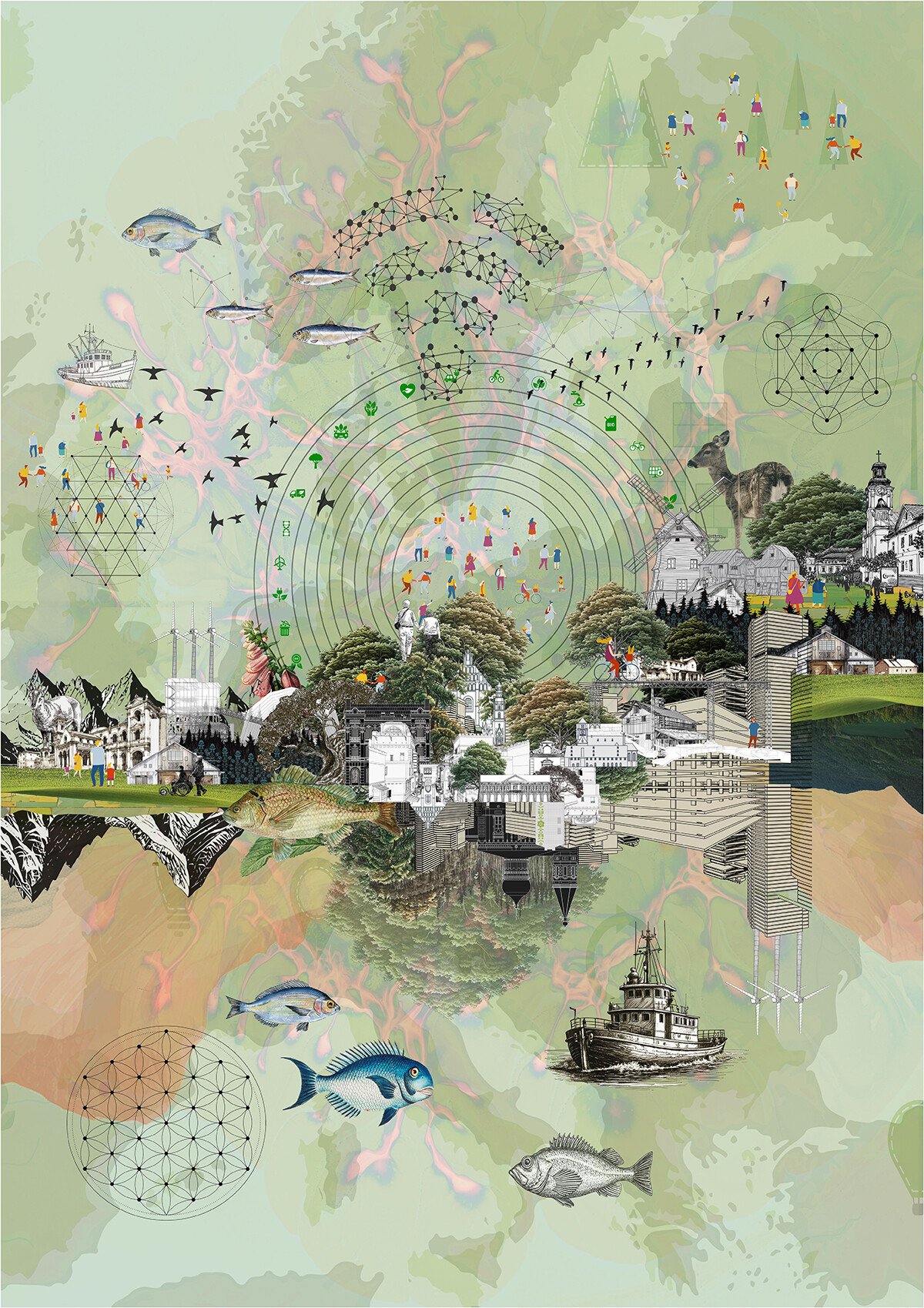
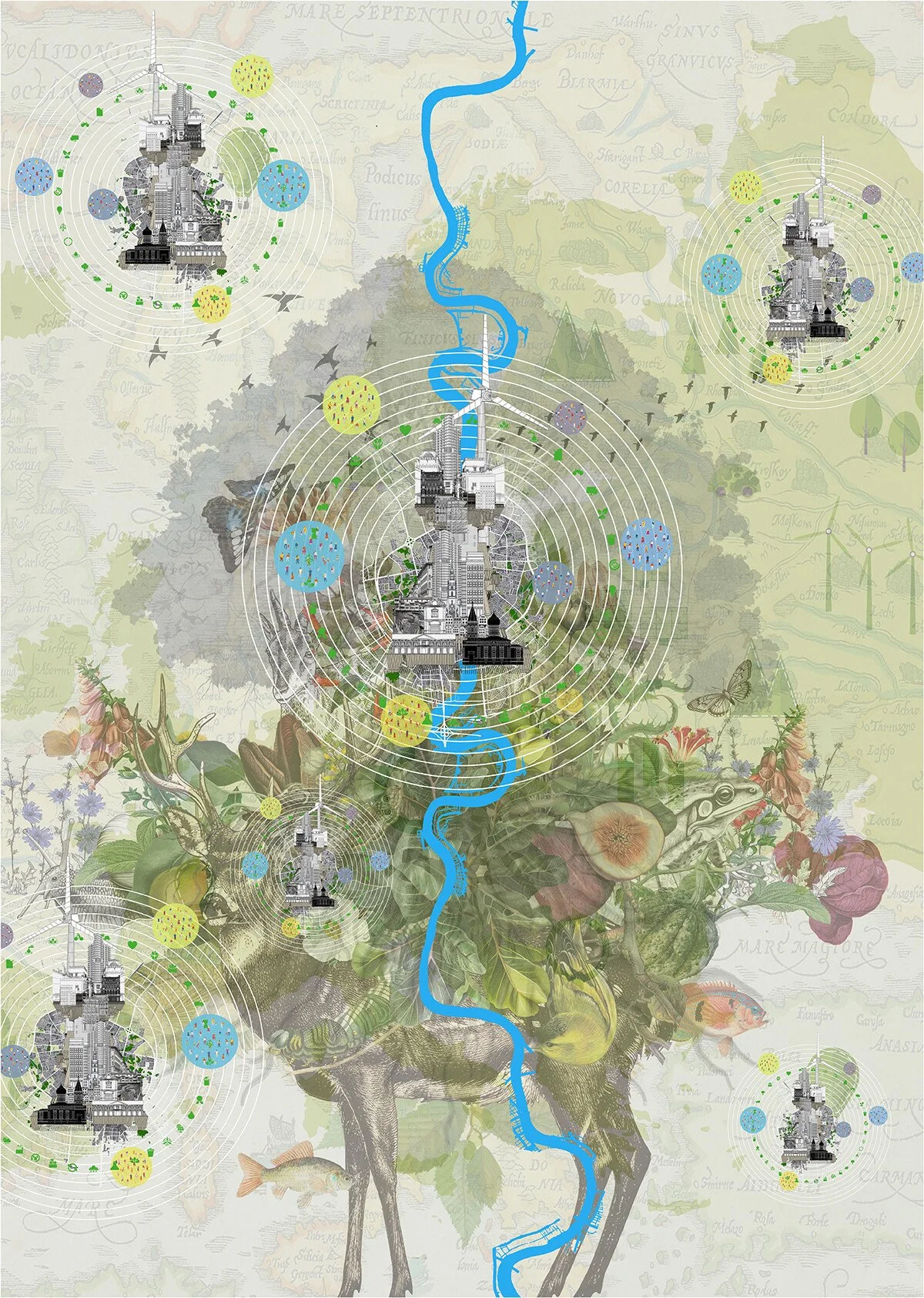
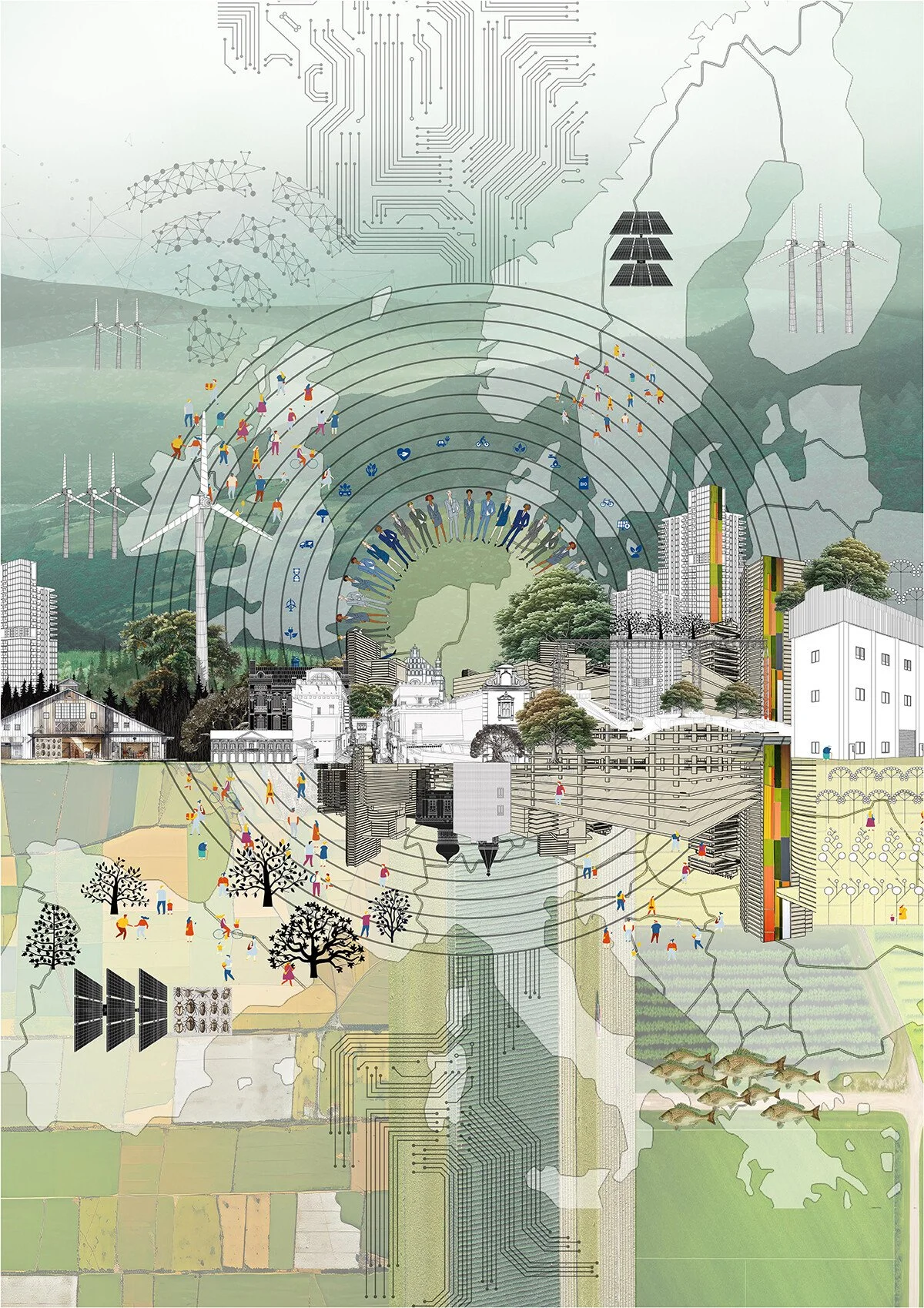
(Figure 1. Artistic interpretation of the three visions from left to right: Dòigh Nàdair: The Way of Nature, NaturAll and Return to Nature.
Artist: Lina Kusaite)
Policy Implications and Recommendations
Adopt nexus-based policymaking to align biodiversity goals with broader sectoral priorities
Excluding biodiversity from widely used scenarios leads to blind spots around critical feedbacks and cascading risks. Integrating biodiversity into societal futures using a nexus approach spanning food, water, energy, health and transport revealed crucial human-nature interactions, key drivers of unsustainability and alternative policy pathways. Aligning biodiversity objectives with broader sectoral priorities is crucial to enable policy coherence and sustain biodiversity outcomes even amid competing agendas. Mainstreaming the role of biodiversity and nature in all major EU foresight, scenario and strategic planning processes can inform more holistic policymaking that better reflects the complexity of possible futures.
Embrace plurality in decision processes to reflect diverse possibilities for change
Positive futures for nature and people in Europe emerge differently according to distinct underlying values and worldviews. This heterogeneity of lifestyles, livelihoods and landscapes across Europe is often masked in high-level biodiversity policy, leading to challenges with policy implementation and perpetuating competing political agendas. Policymaking should embrace plurality by adopting flexible modes of policy implementation that can be adapted for diverse contexts and leveraging participatory visioning processes in policy design for national biodiversity strategies or just transition processes. Doing so can help build public support and ensure policies reflect the diverse contexts across Europe.
Promote adaptive, systems-oriented policymaking that is responsive to emergent socioecological dynamics.
The impact and effectiveness of policies to protect biodiversity and human wellbeing would change significantly depending on emerging societal developments. For example, conservation may be deprioritised politically in futures with geopolitical fragmentation and conflict, and public support for nature may shift in the future in response to deepening inequality. Policymakers should adopt adaptive policy instruments that can evolve with changing ecological and social contexts, helping build resilience and avoid maladaptation. When developing such instruments, a systems approach can help to ensure that trade-offs are anticipated and managed, wherein policies are not optimised for outcomes within a particular sector but rather leverage co-benefits and mitigate trade-offs amid significant complexity.
Recognise that technological solutions are insufficient
Green technological development can reinforce unsustainable resource extraction unless accompanied by transformative value shifts and governance reforms. Additionally, technological and economic fixes can only mask the impacts of ecological decline driven by fossil fuel-dependent economic growth in the short term, as ecosystems may collapse through cascading impacts in the long term. Policymakers should pair policies for technological innovation with strong regulatory frameworks, environmental safeguards and broader educational and cultural shifts that reinforce more sustainable lifestyles and livelihoods.
Reinforce the importance of ecosystem restoration, societal values and inclusive governance for a positive future for people and nature
Ecosystem restoration is a key synergistic solution across sectors – securing food security, climate resilience and human health. This reinforces the need for EU and national investments to prioritise landscape-scale nature-based solutions and the protection of ecological integrity. Governance quality, social cohesion and participatory decision-making are also critical determinants for biodiversity outcomes. Policymakers should therefore invest in governance reforms, co-creation platforms and capacity building initiatives that can support efforts to restore ecosystems and enhance societal resilience.
References:
IPBES. (2024a). Summary for Policymakers of the Thematic Assessment Report on the Underlying Causes of Biodiversity Loss and the Determinants of Transformative Change and Options for Achieving the 2050 Vision for Biodiversity of the Intergovernmental Science-Policy Platform on Biodiversity and Ecosystem Services (K. O’Brien, L. Garibaldi, A. Agrawal, E. Bennett, O. Biggs, R. Calderon Contreras, E. Carr, N. Frantzeskaki, H. Gosnell, J. Gurung, S. Lambertucci, J. Leventon, C. Liao, V. Reyes Garcia, L. Shannon, S. Villasante, F. Wickson, Y. Zinngrebe, & L. Perianin, Eds.). IPBES secretariat. https://doi.org/10.5281/zenodo.3553458
IPBES (2024b). Summary for Policymakers of the Thematic Assessment Report on the Interlinkages among Biodiversity, Water, Food and Health of the Intergovernmental Science-Policy Platform on Biodiversity and Ecosystem Services. McElwee, P. D., Harrison, P. A., van Huysen, T. L., Alonso Roldán, V., Barrios, E., Dasgupta, P., DeClerck, F., Harmáčková, Z. V., Hayman, D. T. S., Herrero, M., Kumar, R., Ley, D., Mangalagiu, D., McFarlane, R. A., Paukert, C., Pengue, W. A., Prist, P. R., Ricketts, T. H., Rounsevell, M. D. A., Saito, O., Selomane, O., Seppelt, R., Singh, P. K., Sitas, N., Smith, P., Vause, J., Molua, E. L., Zambrana-Torrelio, C., and Obura, D. (eds.). IPBES secretariat, Bonn, Germany. DOI: https://doi.org/10.5281/zenodo.13850289.
IPCC, 2021: Summary for Policymakers. In: Climate Change 2021: The Physical Science Basis. Contribution of Working Group I to the Sixth Assessment Report of the Intergovernmental Panel on Climate Change [Masson-Delmotte, V., P. Zhai, A. Pirani, S.L. Connors, C. Péan, S. Berger, N. Caud, Y. Chen, L. Goldfarb, M.I. Gomis, M. Huang, K. Leitzell, E. Lonnoy, J.B.R. Matthews, T.K. Maycock, T. Waterfield, O. Yelekçi, R. Yu, and B. Zhou (eds.)]. Cambridge University Press, Cambridge, United Kingdom and New York, NY, USA, pp. 3−32, doi:10.1017/9781009157896.001.
Lazurko, A., Kim, H., Linney, G., Díaz-General, E., Vaňo, S., Harmáčková, Z. v, Rounsevell, M., & Harrison, P. A. (2025). Enriching the European Shared Socio-economic Pathways with considerations of biodiversity and nature using a nexus approach. Climate Risk Management, 50, 100741. https://doi.org/https://doi.org/10.1016/j.crm.2025.100741
Lazurko, A., de Pater, M., Kim, H., Hebinck, A., Biesbroek, R., DeClerck, F., Krupnik, S., Okruszko, T., Pereira, L. M., Proka, A., Sakellari, E., & Harrison, P. A. (2025). Envisioning nature-positive futures for Europe: inspiring transformative change at the biodiversity nexus. Ecosystems and People, 21(1), 2561107. https://doi.org/10.1080/26395916.2025.2561107
The project: BIONEXT is a research and innovation project that joins the fight for nature and biodiversity. The project produces new evidence to better understand biodiversity loss and demonstrates how biodiversity underpins every aspect of life; the water we drink, the food we eat, and our health. To secure and protect these values, the project demands transformative change: BIONEXT’s goal is a sustainable society, where links between biodiversity, water, food, energy, transport, climate, and health are acknowledged and nature and biodiversity are a part of everyday choices and policymaking.
Project coordinator: Finnish Environment Institute (Syke), (Finland)
Project partners: Dutch Research Institute for Transitions (DRIFT), (Netherlands); Global Change Research Institute of the Czech Academy of Sciences (CzechGlobe), (Czech Republic); Athina-erevnitko kentro kainotomias stis technologies tis pliroforias, ton epikoinonion kai tis gnosis (ATHENA), (Greece); Karlsruhe Institute of Technology (KIT), (Germany); Oppla, (Netherlands); Foundation for Applied Information Technology in Environment, Agriculture and Global Changes (TIAMASG), (Romania); the University of Antwerp, (Belgium); The UN Environment Programme World Conservation Monitoring Centre (UNEP-WCMC), (United Kingdom); UK Centre for Ecology & Hydrology (UKCEH), (United Kingdom)

Bionext Policy Brief | 4 | 2026
Exploring long-term biodiversity futures in Europe: Using the future to inform policy and decision making today
Authors: Lazurko Anita 1), Harrison Paula 1), Heiskanen Anna-Stiina 2), Ronkainen Jukka-Pekka 2)
1) UK Centre for Ecology & Hydrology (UKCEH), 2) Finnish Environment Institute (Syke),
Layout and infographics: Finnish Environment Institute (Syke)
Photo: Stock.adobe.com
Publisher: Finnish Environment Institute (Syke)
Helsinki 2026
ISBN 978-952-11-5881-0 (PDF)
DOI (Helda): 10.58013/dv1f-rs76